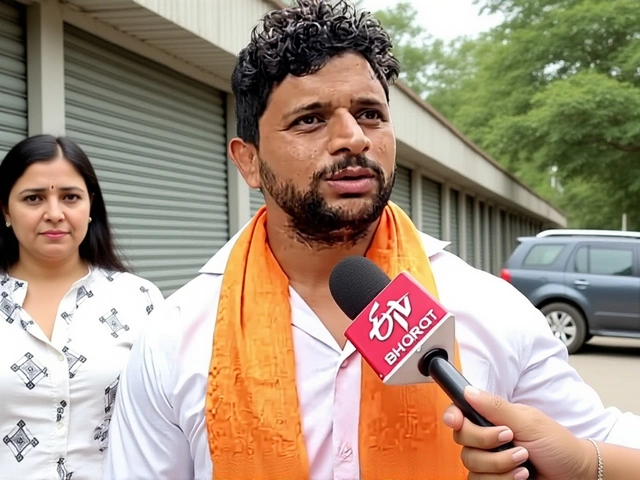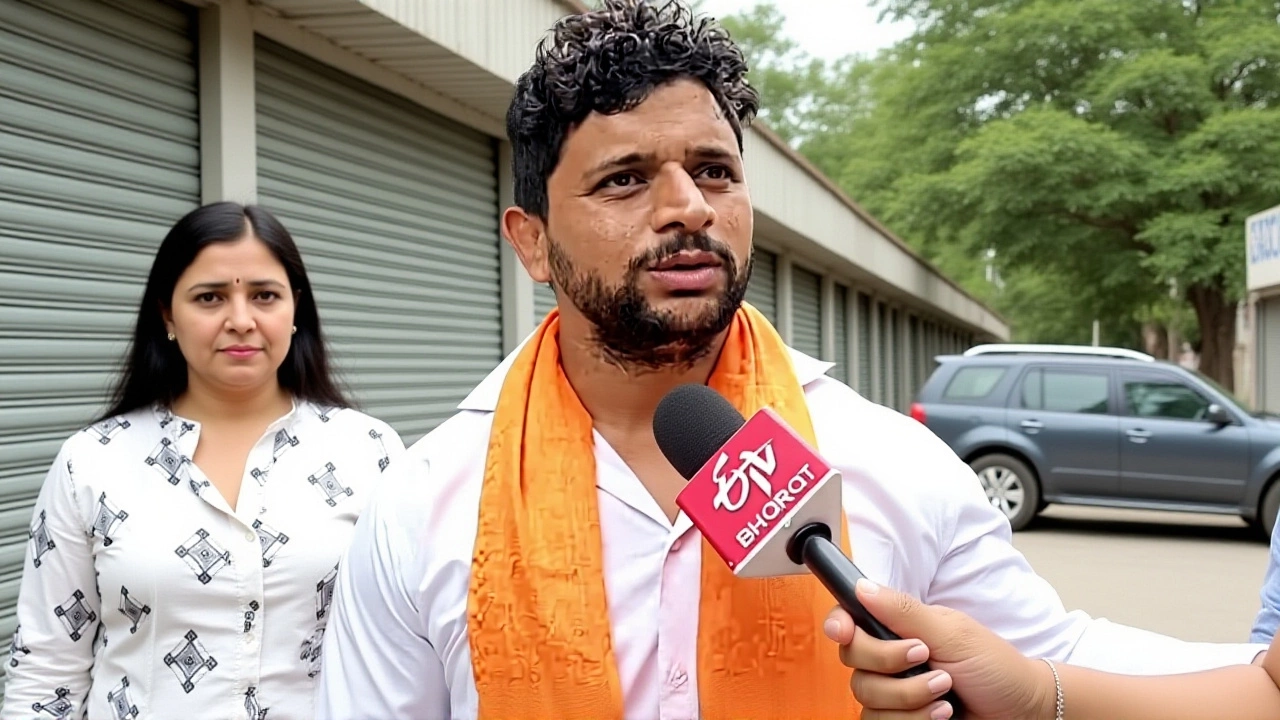
It’s not just the mat that defines a wrestler anymore. In Hamirpur, Himachal Pradesh, two athletes are trading their singlets for political manifestos, aiming to wrestle power in local governance. The twist? They’re bringing an international flair and a hardline social agenda to the table.
Happy Pehalwan has entered the fray for the upcoming Zila Parishad elections, framing his bid as a fight against narcotics abuse. But here’s what’s catching eyes: his Russian sister-in-law, Catherine, is campaigning alongside him, speaking Hindi to rural voters and urging them to vote for the 'Chhata' (umbrella) symbol.
Meanwhile, another athlete, Rohit Pehalwan, is contesting from the Chamned ward, promising to use sports infrastructure to keep youth away from drugs. It’s a rare convergence of athletics, cross-cultural family ties, and grassroots politics.
The Unusual Campaign Alliance
When you think of a village-level election campaign in Himachal Pradesh, you picture local leaders shaking hands and sharing chai. You don’t typically expect a Russian national addressing crowds in fluent Hindi. Yet, that’s exactly what’s happening with Happy Pehalwan’s campaign.
Catherine, identified as Happy’s sister-in-law, has become an unexpected focal point of the race. According to reports from local media outlets like Divya Himachal, she is actively engaging with villagers, appealing directly to them to cast their votes for the 'Chhata' symbol. This isn’t just a photo op; it’s a strategic move to humanize the candidate and showcase a modern, inclusive image.
"The details are still unclear regarding her long-term role," one local observer noted, "but her presence signals that this campaign is trying to break traditional molds." The fact that she is communicating in Hindi—a language she likely learned specifically for this purpose—adds a layer of authenticity that resonates with rural electorates who value effort and respect for local culture.
An Anti-Drug Agenda at the Grassroots
Both wrestlers are anchoring their campaigns on a single, urgent issue: drug abuse. In many parts of India, including Himachal Pradesh, the opioid crisis has devastated communities, leaving families fractured and futures dimmed. By positioning themselves as champions against narcotics, Happy and Rohit are tapping into a deep-seated public anxiety.
Happy Pehalwan’s platform explicitly links voter support to an intensified anti-drug initiative. He argues that elected officials must be held accountable for creating environments where addiction can thrive—or be stopped. His message is simple: vote for change, and he’ll deliver action.
Rohit Pehalwan takes a slightly different angle. As a former athlete who brought fame to the district and state, he believes sports are the antidote to idleness and despair. "We want to keep young people busy, healthy, and hopeful," he stated during a recent rally. His plan involves leveraging existing sports facilities and organizing community events to provide alternatives to substance abuse.
From the Akhada to the Ballot Box
The term 'Akhada' traditionally refers to a wrestling arena, but in this context, it’s being used metaphorically to describe the political battlefield. Both candidates are leveraging their identities as 'Pehalwans' (wrestlers) to project strength, discipline, and resilience—qualities voters often seek in leaders.
Rohit Pehalwan, contesting from the Chamned ward, has built his reputation on athletic success. Reports indicate he has represented the district and state at various levels, earning respect across party lines. Now, he’s translating that popularity into political capital. "People know me from the sports field," he said. "Now they need to know me as a servant of the community."
Happy Pehalwan follows a similar trajectory. His entry into politics is framed not as a departure from his roots, but as an extension of his commitment to public welfare. The involvement of his family, including Catherine, underscores the personal stake he has in this endeavor.
Why This Matters for Local Governance
Zila Parishad elections might seem minor compared to state or national polls, but they wield significant influence over local development. These councils control budgets for education, health, sanitation, and infrastructure. When athletes like Happy and Rohit enter this space, they bring a fresh perspective—one that prioritizes physical well-being and community engagement.
Moreover, their focus on anti-drug initiatives addresses a critical gap in local policy. While larger parties often overlook such niche issues, these independent or smaller-party candidates can drive targeted solutions. If successful, their model could inspire other athletes across India to engage in civic duties.
Key Facts About the Candidates
- Happy Pehalwan: Contesting for Zila Parishad; campaigning with Russian sister-in-law Catherine; focusing on anti-drug measures.
- Rohit Pehalwan: Candidate from Chamned ward; former state-level athlete; advocating for sports-based youth engagement.
- Election Symbol: 'Chhata' (Umbrella) associated with Happy Pehalwan’s ticket.
- Location: Hamirpur district, Himachal Pradesh.
- Core Issue: Combating drug addiction among youth through community and sports initiatives.
What’s Next?
The election dates are yet to be finalized, but the momentum is building. Both candidates are intensifying their outreach, holding rallies and door-to-door meetings. Catherine’s continued participation will likely remain a talking point, especially if she becomes a regular fixture in campaign events.
Observers will be watching closely to see how these athletes navigate the complexities of local politics. Can they translate their sporting discipline into effective governance? Will their anti-drug promises yield tangible results? Only time will tell. But one thing is certain: the 'Akhaḍa' of politics has never been more interesting.
Frequently Asked Questions
Who is Happy Pehalwan?
Happy Pehalwan is a wrestler turned political candidate contesting the Zila Parishad elections in Hamirpur, Himachal Pradesh. He is known for his anti-drug campaign and for involving his Russian sister-in-law, Catherine, in his outreach efforts.
Why is Catherine campaigning for Happy Pehalwan?
Catherine, Happy’s sister-in-law, is participating in the campaign to appeal to rural voters in Hindi. Her involvement highlights the family’s commitment to the cause and adds a unique, cross-cultural dimension to the election strategy.
What is the 'Chhata' symbol?
'Chhata' means umbrella in Hindi. It is the election symbol associated with Happy Pehalwan’s candidacy. Voters are urged to look for this symbol on the ballot paper when casting their votes.
How does Rohit Pehalwan plan to fight drug abuse?
Rohit Pehalwan, contesting from Chamned ward, plans to use sports as a tool to keep youth engaged and away from drugs. He aims to leverage local sports facilities and organize community events to promote healthy lifestyles.
Where are these elections taking place?
The elections are taking place in the Hamirpur district of Himachal Pradesh, specifically for the Zila Parishad (district council). Rohit Pehalwan is contesting from the Chamned ward within this district.